The House Is Quiet, but My Mind Isn’t
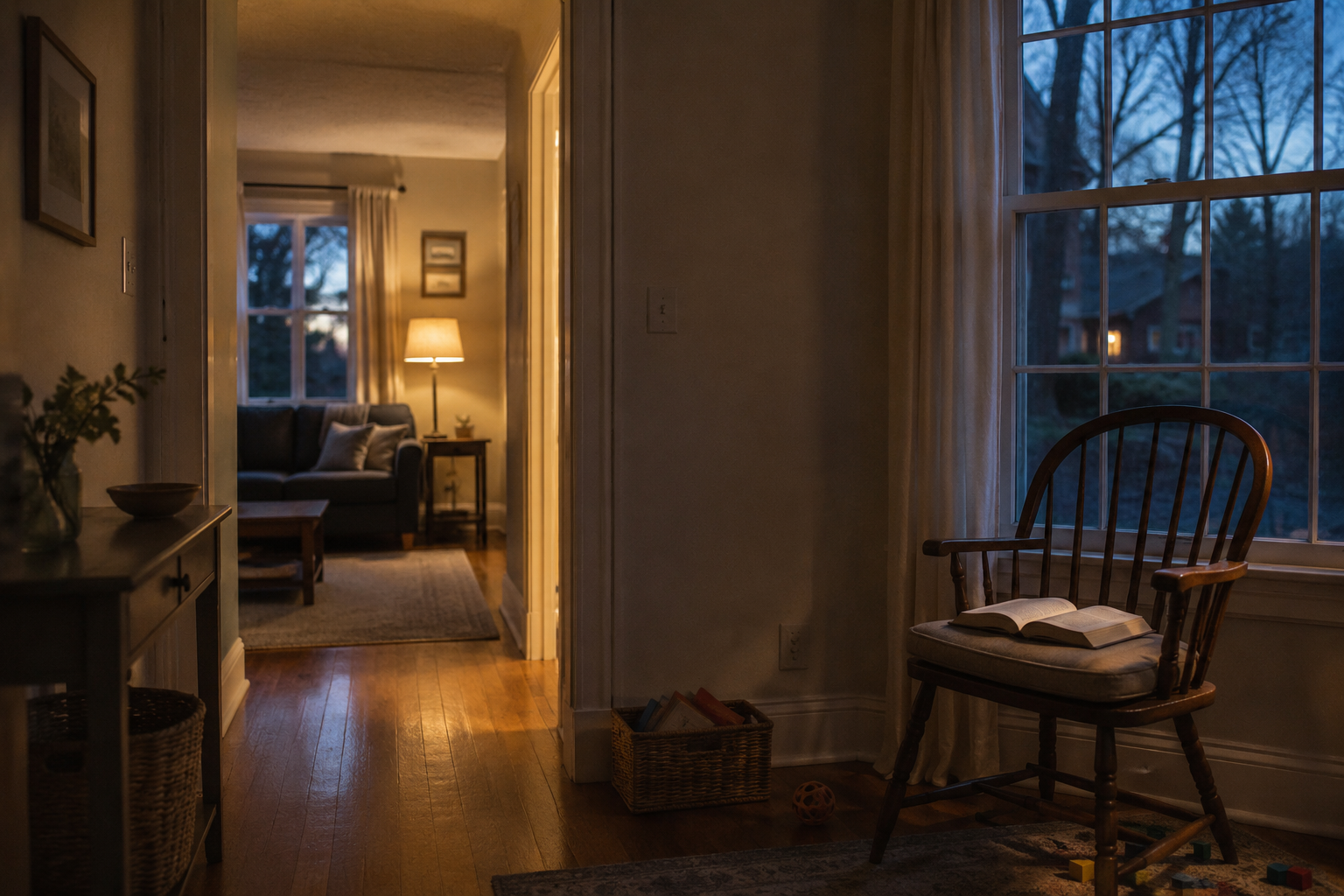
The house can be completely quiet and my mind will still be holding a conversation nobody asked for.
I’ll think about something I need to do, something I forgot to do, a conversation I had three days ago, and a conversation that hasn’t even happened. I’ll remember something I need to tell someone. Then I’ll have an idea for the blog or a junk journal page.
Mixed in with all of that are worries, unfinished responsibilities, and other intrusive thoughts I didn’t invite.
My body may be sitting still, but my mind rarely is.
This has become more noticeable during perimenopause. It’s harder to quiet my thoughts, and I become overwhelmed and overstimulated much more easily than I used to.
The strange part is that it usually happens at home.
Work Is Organized Chaos
You’d think work would be the place where I become overwhelmed.
I’m a respiratory therapist. Work can be busy, noisy, unpredictable, and urgent. There are patients who need me, people asking questions, and situations that can change quickly.
But I rarely shut down at work.
Maybe it’s because work is organized chaos.
I know my role. I know what needs my attention and what can wait. When something changes, I assess it and respond. My training and experience take over, and I do what needs to be done.
Even when several things are happening, there’s usually an order to them. Some needs are more urgent than others. I know how to sort through the noise and decide where I need to be.
Home shouldn’t feel more overwhelming than that, but sometimes it does.
I’ve written before about the quiet that arrived after my children grew up. This is a different kind of quiet.
When Everyone I Love Is in the Room
I love having the kids and Avery here.
I love hearing what everyone has been doing and watching Avery play. I love having my family together.
But sometimes everyone is talking, Avery and Barbie are running around, and there’s so much happening at once that I can feel myself reaching a limit.
Nothing is wrong. No one is doing anything wrong.
It’s simply too much input coming at me at the same time.
I start feeling anxious. I get quiet and stop participating in the conversation. Sometimes I leave the room.
From the outside, it may look like I’m upset, irritated, or no longer interested in what’s happening. Most of the time, I’m trying to keep the anxiety from becoming worse.
I need less sound, fewer conversations, and a little space for my mind to catch up.
That can be difficult to explain because I genuinely want everyone there. I can love the noise because it means my family is together and still reach a point where I can’t process any more of it.
Both things can be true.
Perimenopause Changed My Capacity
I don’t blame every change in my body or mind on perimenopause, but I can’t ignore the timing either.
My tolerance for noise and constant activity isn’t what it used to be. My thoughts are harder to quiet. I become anxious and overwhelmed faster, and it sometimes feels as though my brain has lost the ability to filter anything out.
The Office on Women’s Health includes difficulty sleeping, mood changes, memory problems, and trouble focusing among the symptoms women may experience around menopause.
Knowing that helps me understand why my mind may feel different, but it doesn’t make the experience less frustrating.
I’ve also written about why honest conversations around anxiety and midlife mental health matter to me.
I’ve spent most of my adult life handling things.
I raised children, worked in healthcare, managed a household, and learned how to function during stressful situations. I’m accustomed to being the person who stays calm and figures out what needs to happen next.
It’s unsettling when ordinary noise in my own home feels harder to manage than the organized chaos of work.
At work, I have a defined purpose. At home, everything overlaps. I’m a wife, mother, grandmother, caregiver, and the person mentally keeping track of things that still need to be done.
There isn’t always a clear order. My mind treats every thought as though it needs attention right now.
When the House Finally Becomes Quiet
Eventually, everyone settles down or goes home. Avery and Barbie stop running through the house. The conversations end.
The house becomes quiet.
My mind doesn’t always follow.
It keeps going through responsibilities, worries, unfinished tasks, conversations, and ideas. Sometimes the silence seems to make those thoughts louder because there’s nothing else competing with them.
I can be physically exhausted and still unable to turn my mind off.
That’s when I have to find something that gives my attention one place to land.
Sometimes it’s deep breathing.
Sometimes I read. A book gives me one voice to follow instead of the dozen competing voices in my own mind.
Sometimes I work on a junk journal. I choose paper, cut something out, move pieces around, and decide what belongs on the page. My hands are busy, but the activity doesn’t demand more from me than I have to give.
It gives my mind something enjoyable and manageable to focus on.
Junk journaling has taught me before that peace doesn’t require perfection.
It doesn’t always make every thought disappear. I’m not sure anything does.
But it turns down the volume.
Quiet Doesn’t Mean I Want to Be Alone
I don’t want a silent house all the time.
I want my children to visit. I want Avery running through the house and Barbie following along. I want the conversations, laughter, and ordinary family noise.
I also need moments when no one is asking me a question or expecting me to follow several conversations at once.
Needing that quiet doesn’t mean I’m unhappy that everyone is there. Leaving the room doesn’t mean I’m rejecting anyone.
Sometimes it’s simply the only way I can stay connected without becoming completely overwhelmed.
I’m still learning to recognize the feeling before I shut down. I’m learning that stepping away for a few minutes may be better than forcing myself to remain in the middle of everything while my anxiety continues to grow.
Most of all, I’m trying to stop feeling guilty for needing something that my mind and body are clearly asking for.
At work, I know how to find the most urgent need in the middle of the chaos.
At home, I’m learning that sometimes the urgent need is my own.
So I step away. I breathe. I read a few pages or reach for paper and scissors.
The thoughts don’t disappear completely.
Eventually, though, they stop trying to speak all at once.
With Love from Mabank,
Brandy
Does noise or activity overwhelm you more quickly than it used to? I’d love to know what helps your mind settle when everything feels too loud.
